
No. 1 Winter 1949
|

No. 11 Summer 1952
|

No. 12 Autumn 1952
|

No. 15 March 1953
|

No. 17 July 1953
|

No. 18 September 1953
|

No. 19 November 1953
|

No. 20 January 1954
|

No. 22 May 1954
|

No. 27 March 1955
|

No. 29 May 1955
|

No. 32 August 1955
|

No. 35 November 1955
|

No. 36 December 1955
|

No. 37 January 1956
|

No. 39 March 1956
|

No. 40 April 1956
|
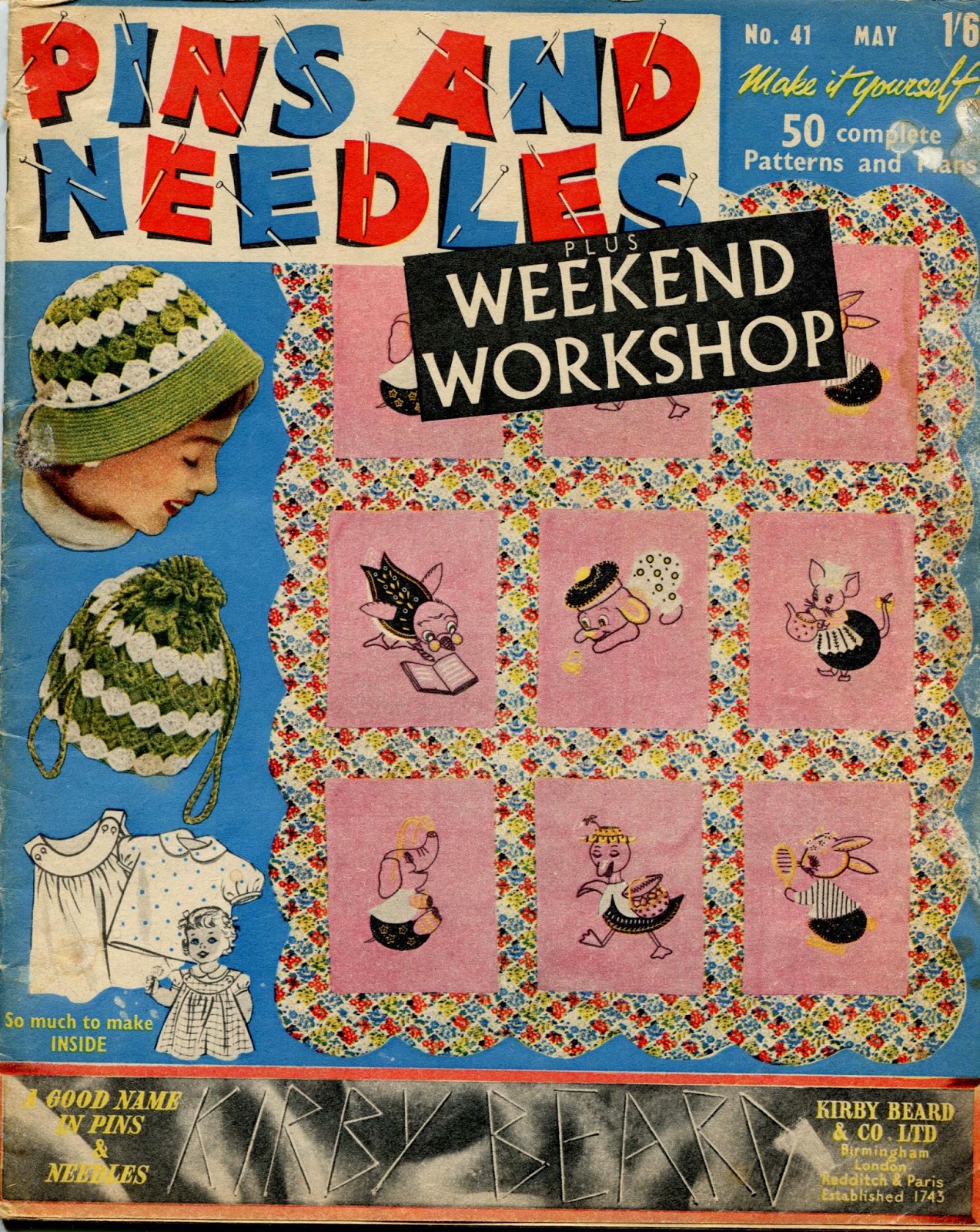
No. 41 May 1956
|

No. 49 January 1957
|

No. 52 April 1957
|

No. 53 May 1957
|

No. 56 August 1957
|

No. 58 October 1957
|

No. 59 November 1957
|

No. 60 December 1957
|

No. 61 January 1958
|

No. 62 February 1958
|

No. 63 March 1958
|

No. 64 April 1958
|

No. 65 May 1958
|

No. 66 June 1958
|

No. 68 August 1958
|

No. 69 September 1958
|

No. 72 December 1958
|

No. 74 February 1959
|

No. 75 March 1959
|

No. 76 April 1959
|

No. 82 October 1959
|

No. 83 November/December 1959
|

No. 86 March 1960
|

No. 92 September 1960
|

No. 98 March 1961
|

No. 99 April 1961

No. 121 February 1963

No. 153 October 1965

No. 167 December 1966
|

No. 105 October 1961

No. 124 May 1963

No. 165 November 1966
|

Saturday, 7 March 2015
Pins and Needles Covers
The covers of Pins and Needles

Sunday, 15 February 2015
With Spring nearly here . . Marriner's 443

This pattern from Marriner (No. 443) is such a pretty summer blouse and comes in 4 sizes so can be easily sized up a couple more inches either by altering the weight of the wool and or needles sizes to fit a larger size. If you do go this route, make sure you don't use a yarn that's too heavy as it could alter the drape of the blouse and you'll just get left with a saggy mess (ask me how I know).
The original wool was a relatively lightweight 3-ply and the tension 7.5 stitches to 1 inch. Increasing the tension size to 7 stitches per inch will give you approximately 1 inch gain over the width of the jumper. 6.5 to 1 inch will add 2 inches or 4 inches overall but I think that this might make the yoke huge and you'd lose the lovely ribbing at the neck so perhaps it's time to grab your adventurer's pants and crack out the calculator and grade the pattern up to the size you want.
With muti-size patterns it's easier than you think and using a spreadsheet programme to get the calculations right means you can see across the whole range to see if anything look wrong. To start you need to read through the whole pattern and mark where numbers change. Rather than write out all the figures, here's the link to the google doc I used with some notes to hopefully explain better. I've used the established numbers for bust sizes 32" to 38" to take the pattern up to 40", 42", 44", and 46"
For the purpose of this, I've assumed that most larger women are larger overall, so bigger waists, bigger arms and wider necks and bigger busts. If you are slender but have a large bust, you could use the smaller sizes for the casting on and then increase to the larger sizes or use bust shaping to get to the required number of stitches for the yoke.
Like most knitting, the proof is in the making and I have not made this up so please use the figures with caution and if you see any glaring errors please comment so I can update the chart.
To download the pattern, please click on the pattern cover above.
Friday, 13 February 2015
Happy Valentine's Day

Code is valid until 17th February so you have the whole weekend to find something that gives you a thrill
Subscribe to:
Posts (Atom)